

Last updated: November 14, 2026
Quick Summary
Hydrolyzed isolate protein is a whey protein that has been filtered to remove almost all fat and lactose, and then broken down into shorter peptides through enzymatic hydrolysis. It is the most predigested form, so it is usually absorbed faster and may be better tolerated if you have digestive sensitivity.
- Isolate undergoes additional filtering, while hydrolyzed adds an enzymatic hydrolysis step.
- An isolate usually declares between 85% and 90% protein, compared to 70% to 80% for concentrate.
- Isolate and hydrolyzed usually contain less than 1 g of lactose per serving, although this varies by manufacturer.
- If your digestion tolerates isolate well, you do not need to pay more for hydrolyzed.
- Calculate the cost per gram of actual protein, not per tub, to compare products.
Table of Contents
- What is whey protein and why does the type matter
- Differences between concentrate, isolate and hydrolyzed protein
- How each type of protein is processed
- Protein percentage, purity and lactose, fat and carbohydrate content
- Whey protein digestibility: absorption speed and digestive tolerance
- Isolate or hydrolyzed protein: which one to choose according to your goal
- When to take whey protein according to your routine
- How to read the label and choose your next BEVERLY protein
- Frequently Asked Questions
What is whey protein and why does the type matter
Whey protein, or whey, is the protein fraction of milk that remains after separating the curds during cheese making. It is one of the most used protein sources in sports nutrition because it provides all essential amino acids in a concentrated dose. But not all whey proteins are the same: the filtering and treatment process changes its purity, its lactose content, and the speed at which the body absorbs it.
Since 1987, BEVERLY has been dedicated to sports supplementation, and the type of protein matters as much as the quantity. A person with digestive sensitivity and a bodybuilder in a bulking phase do not need the same form of protein. Understanding these differences allows you to choose wisely instead of being guided only by price or advertising.
Differences between concentrate, isolate and hydrolyzed protein
The three main variants start from the same raw material, but differ in the degree of processing:
- Concentrate: is the least processed form. It usually contains between 70% and 80% protein, with a bit more lactose, fat, and carbohydrates. It is the most economical option per gram of protein.
- Isolate: undergoes additional filtering that removes most of the fat and lactose. The result is a purer protein, with a higher percentage of protein per serving.
- Hydrolyzed: in addition to being isolated, it undergoes hydrolysis, a process that breaks down protein chains into shorter peptides. It is the most predigested form.
The practical difference between isolate and hydrolyzed is the degree of predigestion. A hydrolyzed isolate protein is already very pure, while hydrolyzed has been broken down so that the body processes it with less effort. If your priority is purity, isolate is usually enough. If your priority is digestive tolerance, hydrolyzed makes more sense.
How each type of protein is processed
Processing defines the final quality. In concentrate, the whey is filtered to remove water and some non-protein components, without a very fine separation. In isolate, more selective filtering methods are applied, such as microfiltration or ultrafiltration, which concentrate the protein and reduce fat and lactose.
Hydrolyzed starts from an isolate and adds an enzymatic hydrolysis step: proteolytic enzymes cut the chains into smaller fragments. Manufacturers control the degree of hydrolysis, that is, what proportion of the protein has been broken down. A high degree produces more short peptides and, generally, a more bitter taste, so the process requires a balance between digestibility and palatability.
Protein percentage, purity and lactose, fat and carbohydrate content
The label is the best starting point for comparison, but it is not enough to read the large percentage on the front. It is advisable to review the nutritional information per 100 g and per serving, and pay attention to these values:
- Protein per serving and per 100 g: an isolate usually declares between 85% and 90% protein by total weight, while a concentrate usually stays between 70% and 80%. Hydrolyzed starts from an isolate, so it usually moves in a similar range to isolate, although the exact percentage depends on the degree of hydrolysis and the added ingredients.
- Lactose: isolate and hydrolyzed usually contain very low amounts, often below 1 g per serving, although this varies by manufacturer and flavor. Concentrate can exceed several grams per serving. If you have lactose intolerance, always check the exact figure on the label and do not be guided only by the word "isolate".
- Fats and carbohydrates: the more filtered the protein is, the lower its fat and sugar contribution per serving. In an isolate, it is common to find less than 1-2 g of fat and carbohydrates per serving, while a concentrate can double or triple those figures.
- Added ingredients: many flavored proteins include sweeteners, flavorings, thickeners, or digestive enzymes. These ingredients can increase the weight of the serving without providing protein, so always compare based on grams of actual protein.
To compare two products, calculate the cost per gram of actual protein, not per tub. For example, if a 1 kg tub declares 80 g of protein per 100 g, it contains approximately 800 g of protein; if another 1 kg tub declares 90 g per 100 g, it contains about 900 g. Divide the price by those total grams to get the real cost per gram of protein. A cheaper product per kilo can end up being more expensive if it has less protein per serving.
Attention: do not confuse the protein percentage with the purity of the supplement. A product can declare a high percentage of protein and, at the same time, include additives or unwanted contaminants; always review the full list of ingredients and, if possible, third-party analyses.
Whey protein digestibility: absorption speed and digestive tolerance
Whey is a fast-absorbing protein. After taking it, the amino acids reach the bloodstream in less time than with casein, another dairy protein. Hydrolyzed tends to absorb even faster because its peptides are already broken down.
That speed has an important nuance. For some people, faster digestion can translate into less abdominal discomfort. For others, the difference may be imperceptible. If you notice bloating or gas with other proteins, a hydrolyzed isolate protein or an isolate is usually a good starting point, although it is also advisable to review the dose and pace of consumption. If you have a diagnosed digestive condition, consult a healthcare professional before changing your supplementation.
Isolate or hydrolyzed protein: which one to choose according to your goal
The choice depends on your specific situation, but it is advisable to separate what the evidence says from what marketing suggests. Hydrolyzed is potentially absorbed faster because its peptides are shorter, but faster digestion does not automatically mean more muscle or better recovery. What matters most for most athletes is reaching the total daily protein intake and maintaining good digestive tolerance.
- If you are looking for purity and low lactose content, isolate protein is the balanced option. It is suitable for most athletes who want a clean supplement for everyday use, and it usually has a lower cost per gram of protein than hydrolyzed.
- If you have digestive sensitivity, hydrolyzed may be better tolerated because it reaches the intestine already broken down. However, the evidence is not conclusive for everyone: some studies find no clear differences in digestive discomfort between isolate and hydrolyzed at usual doses. If you notice bloating or gas, first review the dose, pace of consumption, and added ingredients before assuming you need hydrolyzed.
- If you train with high intensity and are looking for fast recovery, both work well. Hydrolyzed offers a theoretical advantage in absorption speed, but the practical difference for most people is small if the total protein intake is adequate. It is not essential to pay more for hydrolyzed if your digestion responds well to isolate.
As a practical rule, you do not need to pay more for hydrolyzed if your digestion responds well to isolate. The extra cost is only justified when digestive tolerance is the limiting factor or when a healthcare professional recommends it for a specific condition.
Attention: neither isolate nor hydrolyzed should be presented as automatically safe for everyone. Lactose sensitivity is not the same as a milk protein allergy; if you have a diagnosed allergy, consult a healthcare professional before choosing any whey supplement. In addition, the term "hydrolyzed" does not guarantee greater purity or better tolerance on its own: the degree of hydrolysis varies between products and it is advisable to review the manufacturer's information.
The key differences between both forms of whey protein are summarized in the following table according to each person's goal.
| Goal | Recommended option | Reason |
|---|---|---|
| Purity and low lactose content | Isolate | Additional filtering and good value for money |
| Digestive sensitivity | Hydrolyzed | Shorter and predigested peptides |
| Recovery after training | Both | Total protein intake matters more than the form |
| Digestion that already tolerates isolate well | Isolate | No need to pay more for hydrolyzed |
When to take whey protein according to your routine
Whey fits into different times of the day. After training is the most common use, as its fast absorption helps cover recovery needs. However, it is not essential to take it in the immediate post-workout window: what matters most is reaching your total daily protein intake.

Other practical uses include a shake between meals if you struggle to reach your daily goal, or a supplement to breakfast. If you have doubts about the dose, start with the amount you need according to your weight and activity, and adjust from there.
!Athlete preparing a protein shake in a bright kitchen after training, with a bottle of water and a towel on the counter
How to read the label and choose your next BEVERLY protein
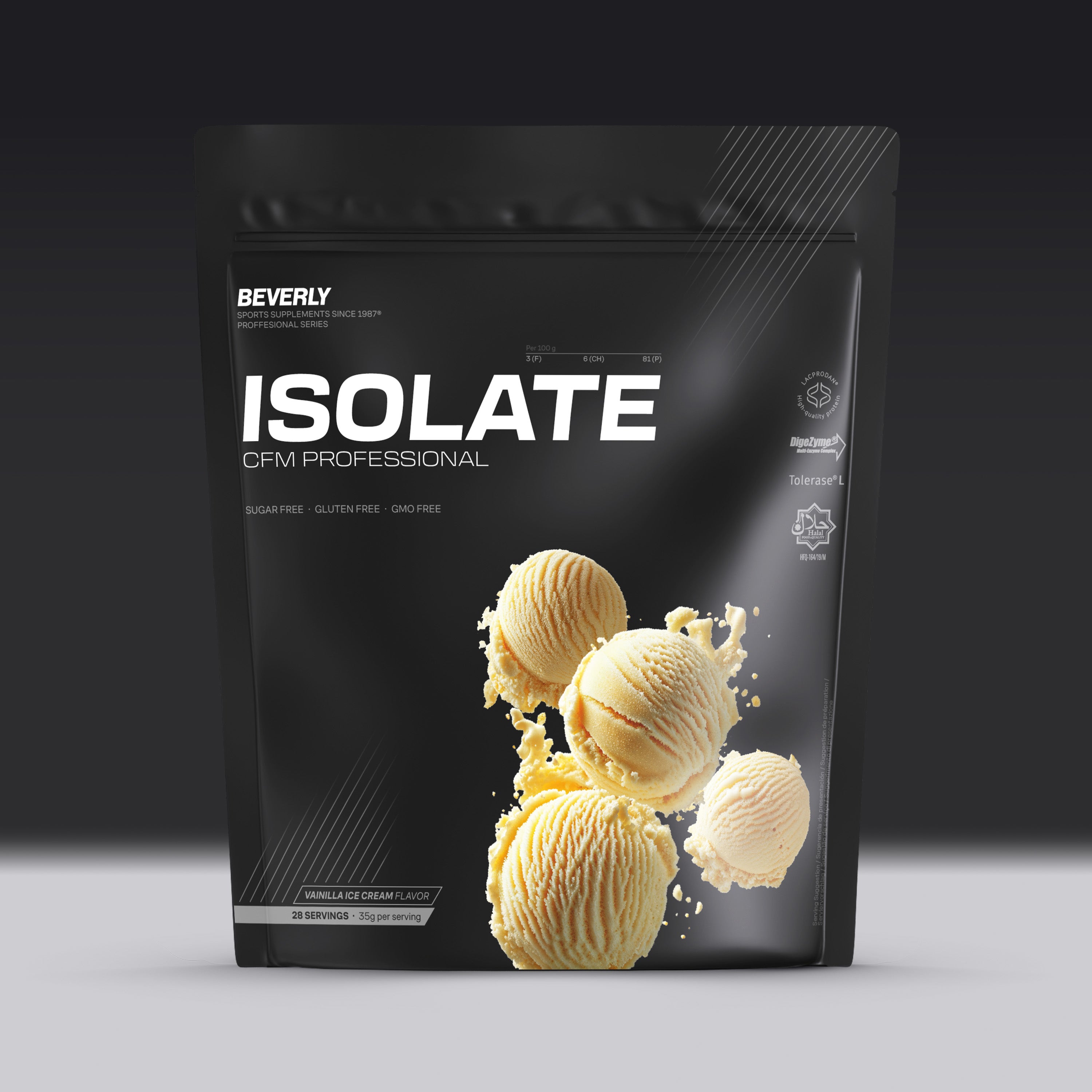
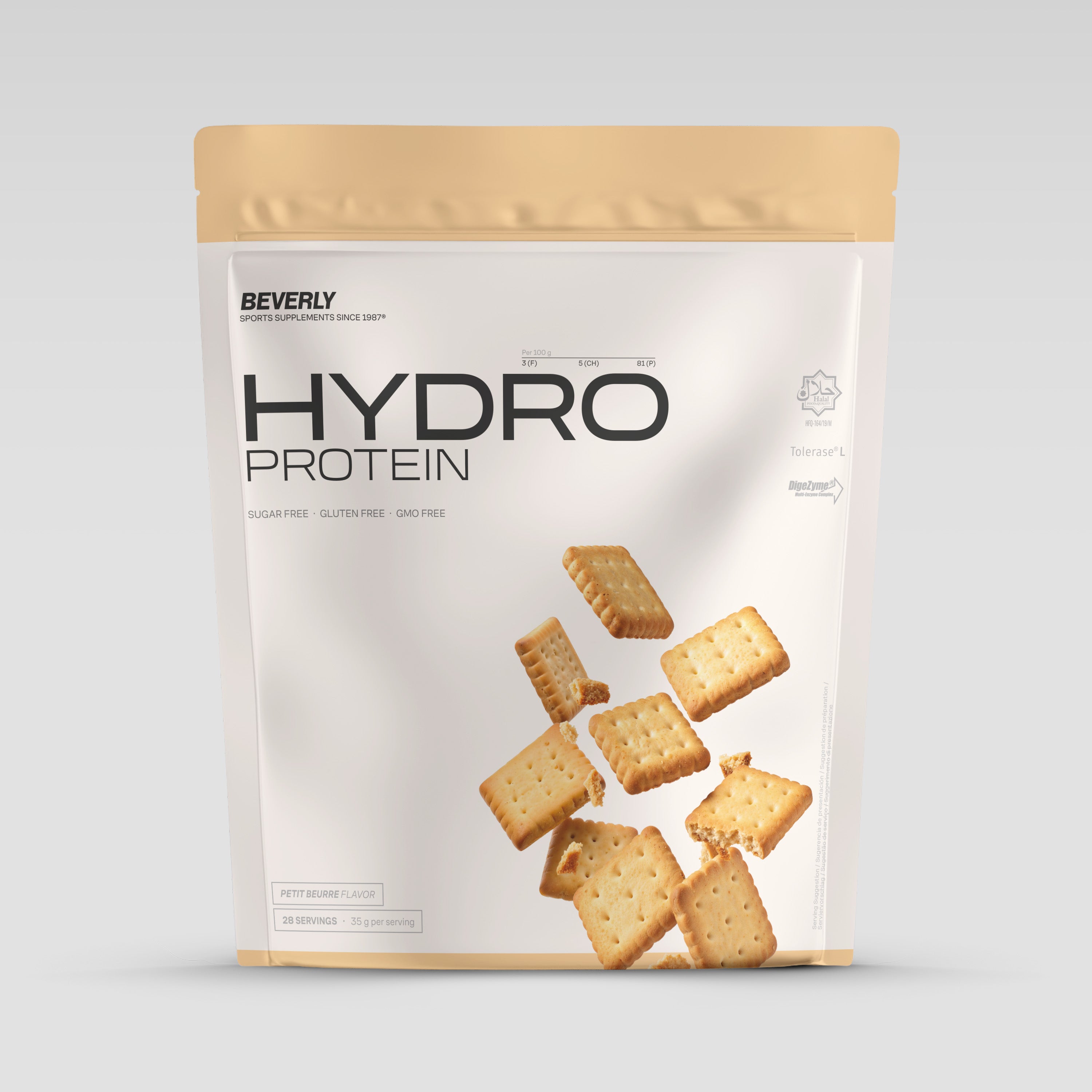
Before buying, check four pieces of data: the percentage of protein per serving, the lactose content, the list of ingredients, and the certifications. At BEVERLY, the Isolate CFM Professional - 1 Kg - Vanilla Ice Cream is an isolate protein that includes digestive enzymes and GMP and Halal certification, designed for those looking for purity and good digestion. If you prefer a hydrolyzed option, the Hydro Protein 1 Kg Petit Beurre is aimed at those who have a sensitive digestion or are looking for faster absorption.
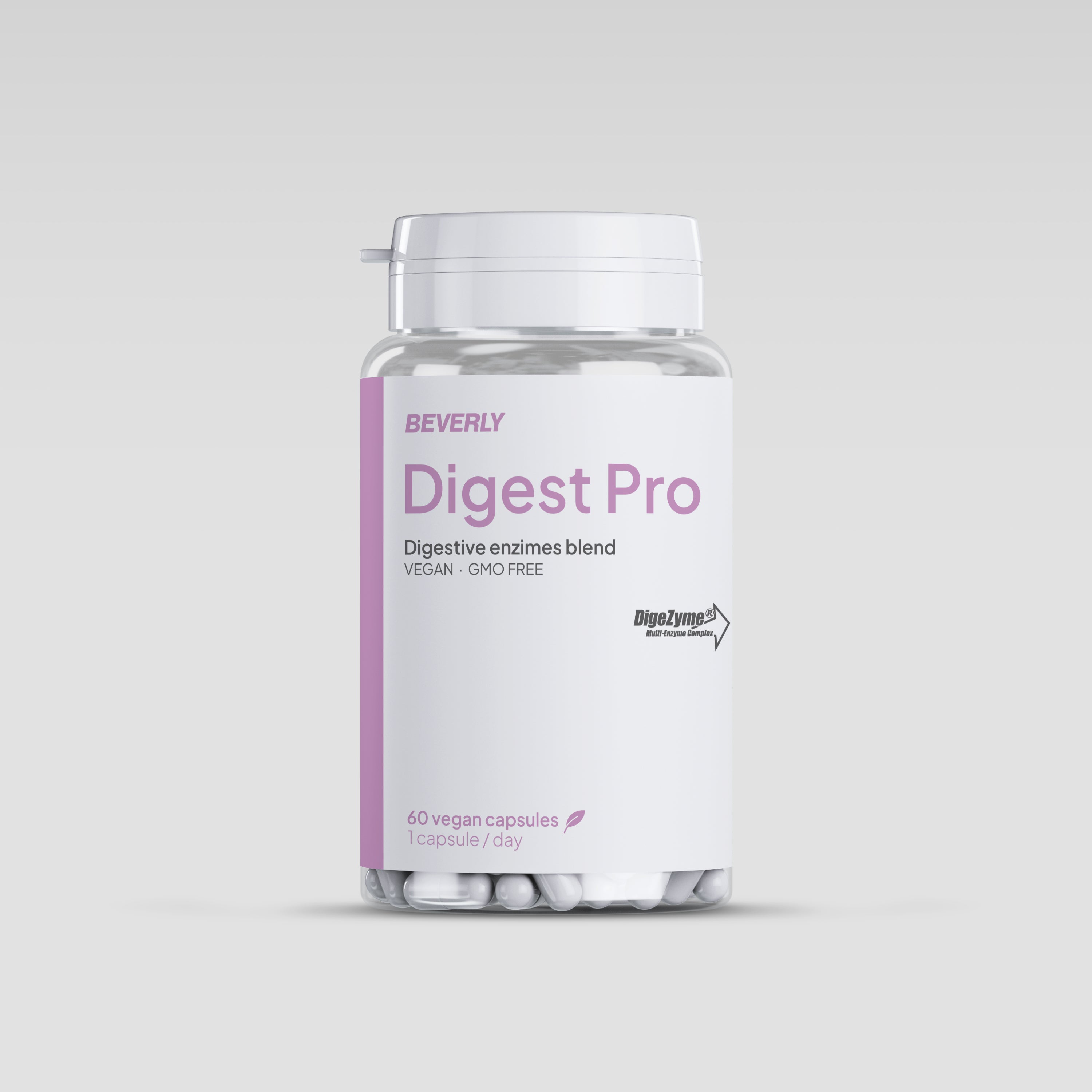
If your question is how digestion works once you take the protein, Digest Pro Digezyme 60 Caps is an enzyme supplement that can complement your supplementation. For a concentrate option with strawberry and cheesecake flavor, Whey Pro Concentrate 1 Kg Strawberry Cheesecake is the most economical per gram, provided your digestion tolerates it well.
Our advice is to start with the form that best suits your digestion and your budget, and check how you feel for a few weeks before switching.
Frequently Asked Questions
What is the difference between isolated and hydrolyzed protein?
Isolated protein is obtained by filtering the whey until almost all the fat and lactose are removed, with a high protein percentage per serving. Hydrolyzed is an isolate in which the protein chain has been broken into smaller peptides through enzymatic hydrolysis. Both are high-purity whey proteins, but hydrolyzed is pre-digested, which usually speeds up its absorption and facilitates digestion in sensitive people. Its price tends to be higher, so it is worth considering whether that pre-digestion compensates in your specific case.
Which protein is digested faster, isolated or hydrolyzed?
In general, hydrolyzed protein is digested and absorbed faster than isolated, because its chains are already divided into shorter peptides. Even so, the practical difference depends on the person and the degree of hydrolysis of the product. If your stomach tolerates isolated well, you do not have to pay more for a hydrolyzed to get similar results in muscle mass. The digestive enzymes included in formulas like those from BEVERLY can help digestion, but they do not replace the hydrolysis process.
Is hydrolyzed protein better than isolated?
It is not better in general terms, it is different. Hydrolyzed protein is preferable if you have digestive discomfort or are looking for the fastest possible absorption, although it usually costs more per gram of protein. Isolated offers very high purity, a good amino acid profile, and a lower cost, which makes it suitable for most athletes who tolerate residual lactose well. Choose according to your digestive tolerance and your budget, not just because of the 'hydrolyzed' label.
Which protein has less lactose?
Isolated and hydrolyzed protein have less lactose than concentrate, because the filtering process removes a good part of the milk sugars. Even so, they are not completely lactose-free, so a person with severe intolerance may still notice symptoms. Always check the nutritional table of the serving and, if you have a diagnosed intolerance, consult your doctor or dietitian before choosing the product.
Does isolated or hydrolyzed protein help more to gain muscle mass?
Both provide high-quality protein with enough leucine to promote muscle protein synthesis, so the difference in muscle mass gain is small if the total daily protein is adequate. The deciding factor is usually the total amount of protein, training, and overall diet, not the type of whey. Hydrolyzed may be more convenient for those who train intensely and have sensitive digestion.
When is it best to take isolated or hydrolyzed protein?
Many athletes take it after training, when they are looking for quick recovery, although it is also useful first thing in the morning or between meals to complete the daily intake. Hydrolyzed may be preferable if you take it shortly before or after training and your stomach is sensitive. The most important thing is to consistently reach your daily protein goal, spreading it throughout the meals of the day.
Is hydrolyzed protein suitable for people with lactose intolerance?
It can be in many cases, because the hydrolysate contains very little lactose and its digestion is lighter. However, it is not indicated for every intolerance, and people with milk protein allergy must avoid any whey. Before taking a product like BEVERLY's Hydro Protein, check its list of ingredients and consult a healthcare professional if you have a diagnosed intolerance or allergy.
