

Last updated: November 22, 2026
Quick Summary
To check GMP certification, ask the manufacturer for the certificate directly and verify the exact company name, the facilities covered by the scope, the issue and expiry dates, and the certification body. Confirm its validity with that body and repeat the check every year.
- Ask the manufacturer for the GMP certificate, not the seller or the store.
- Be wary of a PDF without letterhead, certificate number, or identifiable certification body.
- A certified facility does not mean a certified product: ask for the batch laboratory analysis.
- GMP covers how it is manufactured; HACCP identifies and controls food safety hazards.
- BEVERLY has been manufacturing and quality controlling under GMP standards for over 40 years.
Table of Contents
- How to verify a GMP certificate step by step
- Supplement manufacturer's GMP certificate: what to ask for and who to ask
- Laboratory analysis in supplements and the difference between GMP and HACCP
- Frequently Asked Questions
How to verify a GMP certificate step by step
Checking GMP certification is simple: ask for the document, read what it covers, and confirm that it is still valid. GMP (Good Manufacturing Practice) requires controlling facilities, processes, and documentation.
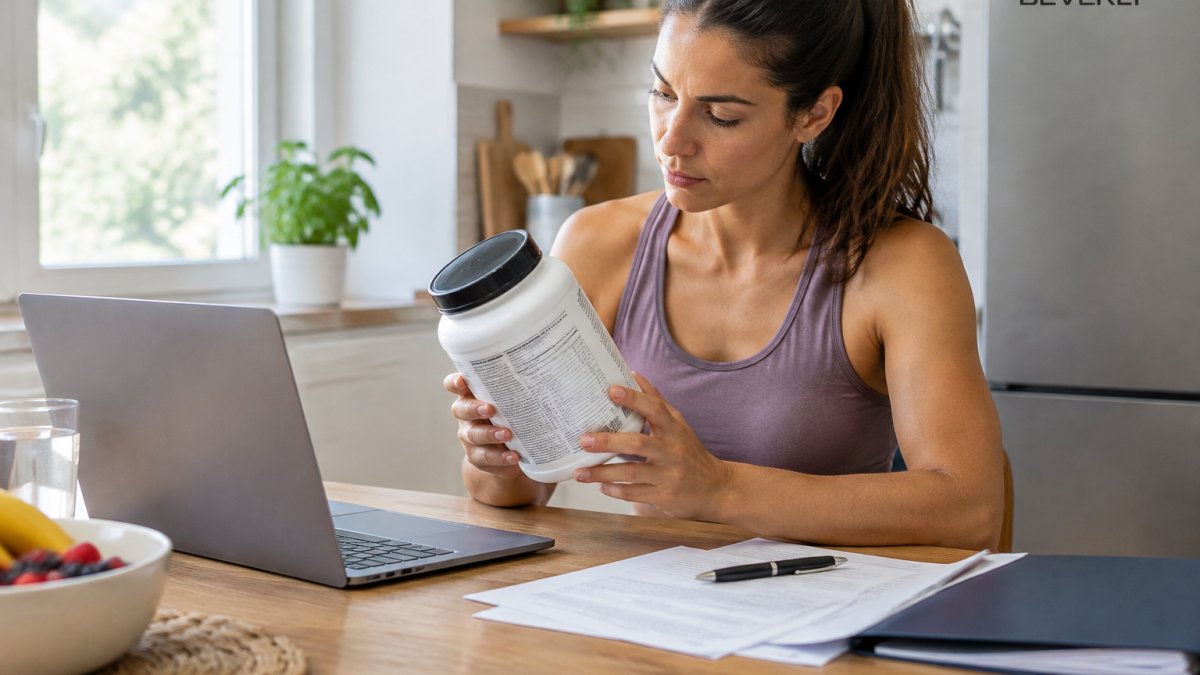
Ask the manufacturer for the certificate, not the seller; check the exact company name, which facilities are included in the scope, the issue and expiry dates, and identify the certification body to confirm it with them. Keep a copy and repeat the check every year.
Beware of: a PDF without letterhead, without a certificate number, and without an identifiable certification body. A seal that cannot be verified is worthless.
If you want to expand on this process, we have a guide on the steps to safely buy sports supplements online.
Supplement manufacturer's GMP certificate: what to ask for and who to ask
A manufacturer's GMP certificate demonstrates that their facilities comply with good manufacturing practices. Ask for it directly from the manufacturer, not the store.
A certified facility is not the same as a certified product: the certificate covers the process, not every batch. Also ask for the laboratory analysis of the specific batch, the technical data sheet, and the amino acid profile.
At BEVERLY, we manufacture and quality control under GMP standards. That traceability is what you should demand from any supplier.
Red flags: company name different from the manufacturer, expired expiry date, scope limited to a product line that does not produce your product, or a seal without a certification body or registration number.
If your concern is anti-doping controls, this guide on how to avoid prohibited substances in supplements fits with what you have just read.
Laboratory analysis in supplements and the difference between GMP and HACCP
Laboratory analysis verifies the final product: ingredient identity, potency, purity, and absence of contaminants. GMP covers how it is manufactured; HACCP identifies and controls food safety hazards during the process.
GMP certification guarantees the manufacturing system, not the composition of every bottle. The two documents together provide a complete picture.
| Standard | What it covers | What it does not cover |
|---|---|---|
| GMP | Facilities, processes, and documentation | Composition of the final batch |
| HACCP | Hazards and critical control points | Overall quality system |
| External analysis | Identity, potency, and purity of the batch | The manufacturing system |
To apply these criteria when choosing a product, consult how to choose supplements for muscle definition.
At BEVERLY, we have been manufacturing sports nutrition for over 40 years and produce our own whey protein concentrate, isolate CFM, and hydrolysate. Total protein, diet, training, and rest matter more than accumulating products.
Checking a GMP certification does not require being an expert: ask for the document, verify the scope, and confirm the certification body. At BEVERLY, we manufacture under GMP standards, with our own whey protein and HALAL certification in most of our products, so you know exactly what you are taking. Visit our store and choose your supplement with the documentation at hand.
Frequently Asked Questions
How can I check if a supplement has GMP certification?
Ask the manufacturer for the current certificate and check that it includes the company name, the plant address, the certification body, the scope, and the validity dates. Then, contact that body through its official channel to confirm that the certificate is still active and covers the product lines where the product is manufactured. A seal on the label without a certificate number or identifiable issuer does not allow you to verify anything.
What documents prove that a manufacturer complies with GMP?
The GMP certificate issued by an independent body is the main document, but it is also advisable to ask for the audit report or a summary, the batch laboratory analyses, and the product data sheet. At BEVERLY, we have been manufacturing under GMP standards since 1987. If the manufacturer only sends an image of the seal without associated documentation, the claim is unsupported.
Does GMP certification guarantee that the supplement is effective?
No. GMP certification certifies that the product is manufactured with quality controls, hygiene, and traceability, but it does not measure whether the supplement works for your goal. To assess effectiveness, check the amount of protein per 100 g and per serving, the amino acid profile, the protein source, and the sugars or allergens. GMP certification and nutritional quality are two different checks that should be done separately.
