

Quick Summary
Choosing supplements that are manufactured in-house means that the same brand controls the formula, production, packaging, and a large part of quality control. This does not guarantee a perfect product, but it offers more direct control over raw materials and batches, which the buyer can verify by requesting documentation.
- In-house manufacturing means that the same company designs, produces, packages, and controls a large part of the quality.
- GMP certification should be checked: ask for the current certificate and confirm that it covers the facility where the product is manufactured.
- A useful certificate of analysis identifies the specific batch, the laboratory that performed the test, and the results against specifications.
- True traceability records each raw material with its supplier batch and links it to the product's internal batch.
- Before buying, ask what documentation the brand can provide and how quickly, not just what the label claims.
Table of Contents
- What it really means to manufacture supplements in-house
- GMP certification: what it means and how to check it
- Quality control of sports supplements: analysis, purity, and batches
- Traceability of food supplements and incident management
- How to choose quality supplements: questions before buying
- Frequently Asked Questions
Why choose supplements that are manufactured in-house
Last updated: November 21, 2026
What it really means to manufacture supplements in-house
Manufacturing a supplement in-house, that is, producing "in-house manufactured supplements" under the same roof, means that the same company that designs it controls production, packaging, and a large part of quality control. In the case of BEVERLY, the brand manufactures its own whey protein concentrate, isolate, and hydrolysate. This difference matters especially for discerning buyers who want to know what is really in the container.
This does not guarantee a perfect product on its own. What it does offer is a more direct point of control over raw materials, the formula, and batches, something any buyer can request from their supplier.
In-house manufacturing versus outsourcing: verifiable differences
The difference between in-house manufacturing and outsourcing production is not always visible on the label. That is why it is worth looking at verifiable aspects:
- Who decides the formula and the specifications for each raw material.
- Who performs the batch analysis and how often.
- Whether the company can document the origin of each ingredient.
- Who is responsible for an incident and how a batch recall is managed.
A brand that manufactures in-house can answer these questions with its own documentation.
GMP certification: what it means and how to check it
GMP stands for Good Manufacturing Practices. It is a set of standards that regulates how a product is manufactured, controlled, and documented to ensure quality, hygiene, and traceability. In the supplement sector, GMP certification indicates that the process follows auditable procedures.
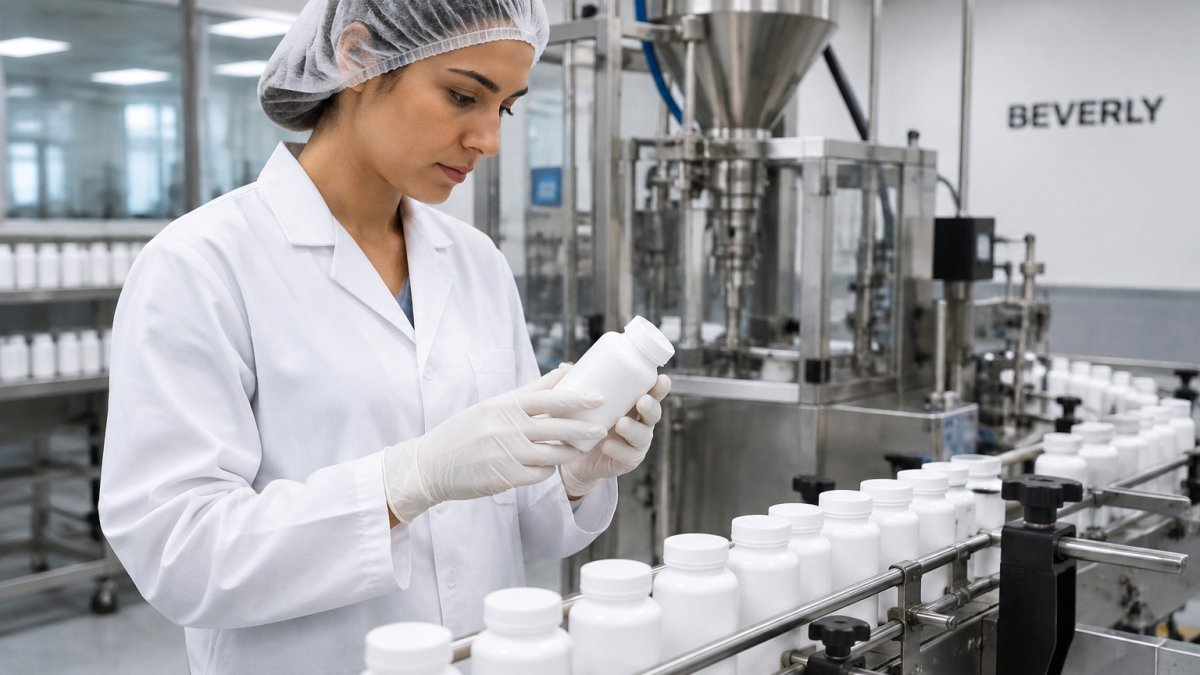
Before trusting that label, it is worth checking several points:
- Ask for the current certificate and verify which facility it covers.
- Confirm that the certification corresponds to the facility where the product you buy is manufactured.
- Check the issue date and whether there has been a recent audit.
- Ask if the brand can provide quality control documentation for its batches.
If the company cannot show these documents, the word "GMP" on the label provides little information on its own.
Quality control of sports supplements: analysis, purity, and batches
The quality control of a sports supplement is not limited to checking that the container is properly sealed. It involves analyzing the composition, purity, and consistency between batches, and providing documentary evidence of each analysis. For those who undergo anti-doping controls, purity is especially relevant, because an undeclared contaminant can have serious consequences even if the active ingredient is correct.
In practice, rigorous control is organized into several levels that are worth distinguishing:
- Raw materials: before entering production, each batch of ingredients should undergo identity tests (confirming that it is what it claims to be), potency tests (actual concentration of the active ingredient), and contaminant tests (heavy metals, solvent residues, microorganisms).
- Product in process: intermediate controls to verify that the mixture, dosage, and manufacturing conditions remain within specifications.
- Finished product: potency and content uniformity analysis to confirm that each serving contains what the label claims, in addition to stability tests that estimate how the product evolves during its shelf life.
- Packaging and labeling: verification that the batch, expiration date, and nutritional information match the production documentation.
The document that summarizes all this is the batch certificate of analysis (CoA). A useful CoA is not a generic seal: it identifies the specific batch, the laboratory that performed the test, the methods used, and the results against specifications.
Attention: a certificate of analysis that does not indicate the batch number or does not identify the laboratory that issued it provides little verifiable information, even if the document looks official.
Even so, the buyer cannot always verify those analyses themselves. That is why it is worth asking the brand to document what tests it performs, how often, and on which batches. The useful question is not just whether the brand claims to have quality control, but what specific document it can provide and how quickly.
You can consult the standalone product Isolate CFM Professional - 1 Kg - Choco Hazelnut to review its composition and see how the brand presents the information.
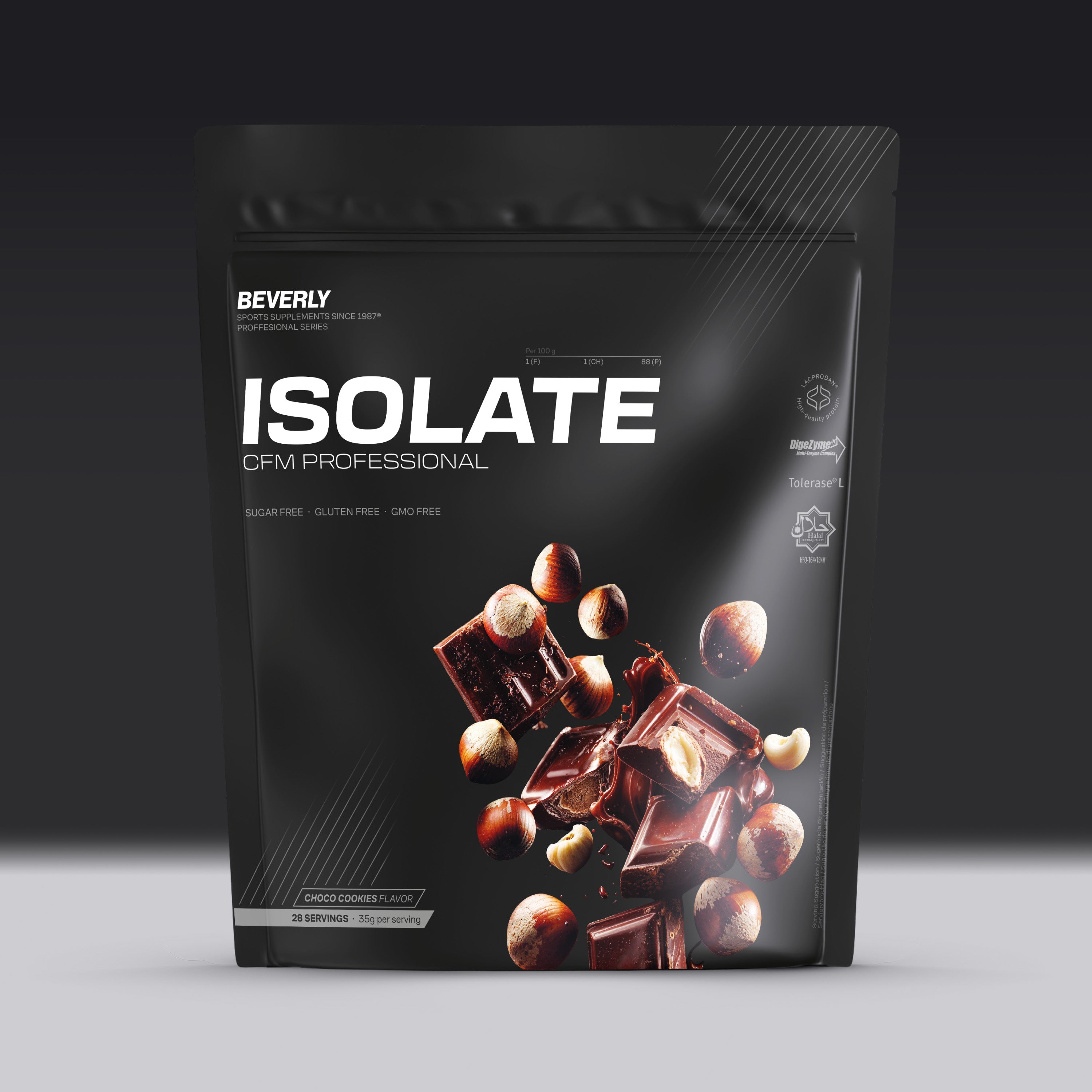
The tests that a brand should perform on each batch are summarized in the following table:
| Control level | What is verified | Test example |
|---|---|---|
| Raw materials | Identity, potency, and contaminants | Heavy metals, solvent residues, microorganisms |
| Product in process | Mixture, dosage, and manufacturing conditions | Intermediate controls within specifications |
| Finished product | Potency and content uniformity | Stability tests during shelf life |
| Packaging and labeling | Batch, expiration date, and nutritional information | Match with production documentation |
Traceability of food supplements and incident management
Traceability allows a product to be tracked from raw materials to the final consumer. When there is a problem, good traceability allows affected batches to be identified and removed without affecting the rest of the catalog.
For that traceability to be real and not just a statement of intent, the system should cover at least these stages:
- Raw material reception: each entry is recorded with its supplier, supplier batch number, reception date, and incoming control results.
- Internal batch assignment: when entering production, the raw material is linked to an internal batch that accompanies the product throughout the process.
- Production record: the quantities used, process conditions, and the people responsible for each phase are documented.
- Packaging and distribution: the internal batch is printed on the container and associated with the customers or channels to which it was sent.
- Sample retention: keeping a retention sample of each batch allows analyses to be repeated if a complaint arises months later.
Incident management is supported by that structure. A deviation can be an out-of-specification analytical result, a customer complaint, or a notice from the raw material supplier. In each case, the procedure should answer four questions: which batch is affected, how many units were distributed, to whom they were sent, and what measure is taken (reanalysis, blocking, recall, or communication).
Attention: traceability that only goes as far as the external manufacturer, without identifying the raw material batch, does not allow the problem to be narrowed down and forces more product than necessary to be recalled.
To understand how to avoid risks when choosing supplements, the guide on 5 Steps to Avoid Prohibited Substances in Supplements explains what to check before buying. In the event of any incident, it is reasonable to ask the brand how it manages recalls, what response time it offers, and if it can identify the affected batch without relying on a third party. In-house manufacturing does not eliminate the risk, but it makes the response faster and more verifiable.
How to choose quality supplements: questions before buying
Before buying, it is worth asking yourself some specific questions. A quality supplement is recognized by the transparency of its information, not just by its price or advertising.
- Does the brand clearly indicate the protein source and its composition per serving?
- Can it provide certifications and batch analyses?
- Does it explain the origin of its ingredients and its manufacturing process?
- Does it have a clear policy for incidents or recalls?
If you want to delve deeper into buying, the guide Buying sports supplements online safely: 7 steps collects the steps to follow before placing the order. For isolate protein, you can also read How to buy high-quality isolate protein without mistakes, which summarizes what to compare between options.
In-house manufacturing does not replace the buyer's verification, but it makes it easier for the brand to respond with concrete data. When evaluating any supplement, the key question is what documentation you can obtain, not just what the label promises.
Frequently Asked Questions
What does it mean for a supplement to be manufactured in-house?
It means that the brand designs, produces, and packages the product in its own facilities, without depending on an external manufacturer at each stage. This allows direct control over raw materials, production parameters, and batch records. It does not guarantee greater quality on its own: what matters is whether the company documents those controls and can prove them with verifiable analyses and records.
What does GMP certification mean in supplements?
GMP stands for Good Manufacturing Practices, the good manufacturing practices that regulate hygiene, process control, and documentation in production. To check it, ask the brand for the current certificate and verify that it corresponds to the facilities where the product you buy is manufactured. A well-documented certification allows you to review what is controlled, how often, and who audits it.
How can I check the traceability of a supplement?
Check that the packaging indicates a batch number and an expiration date, and that the brand can link that batch to its raw materials and production records. Solid traceability makes it possible to quickly identify which units are affected if an issue arises. If the company does not respond with specific information about its batches, this is a red flag.
What should I look for before choosing a sports supplement?
Check the amount of protein per serving and per 100 g, the protein source, the amino acid profile, and the list of ingredients with their allergens. Also check whether the brand documents its quality controls and certification. Be wary of non-transparent labels or exaggerated promises, and consult a healthcare professional if you have any medical conditions or are taking medication.
