

Quick Summary
When buying a high-quality protein isolate, first look at how much protein each serving provides, not the total weight of the container. Also check the amino acid profile, lactose, and fats on the label, as well as GMP or Halal certifications. Then calculate the cost per gram of actual protein to make a fair comparison.
- Look at how many grams of protein each serving provides, not just the total weight of the container.
- Check the amino acid profile, especially the essential amino acids and leucine.
- GMP certifications indicate manufacturing under quality, hygiene, and safety standards.
- Compare the cost per gram of protein, not the price per kilo of the container.
- An isolate contains less lactose, but it is not suitable for milk allergies.
Table of Contents
- What a protein isolate really means
- Difference between protein isolate and hydrolysate
- Protein isolate vs concentrate: which is right for you
- Verifiable criteria for assessing quality
- Cost per serving and per gram of protein
- Best protein isolate according to your goal
- Lactose-free protein isolate: what to expect
- Your next step: choosing the format and flavor at BEVERLY
- Frequently Asked Questions
How to buy high-quality protein isolate without mistakes
Last updated: November 19, 2026
What a protein isolate really means
A protein isolate is a protein supplement that has undergone a filtration process to increase its protein content and reduce fats and lactose. In BEVERLY's case, the reference product is Isolate CFM Professional, which is made with Lacprodan® SP-9226 whey protein isolate. When buying, the first thing to look at is how much protein each serving provides, not just the total weight of the container.
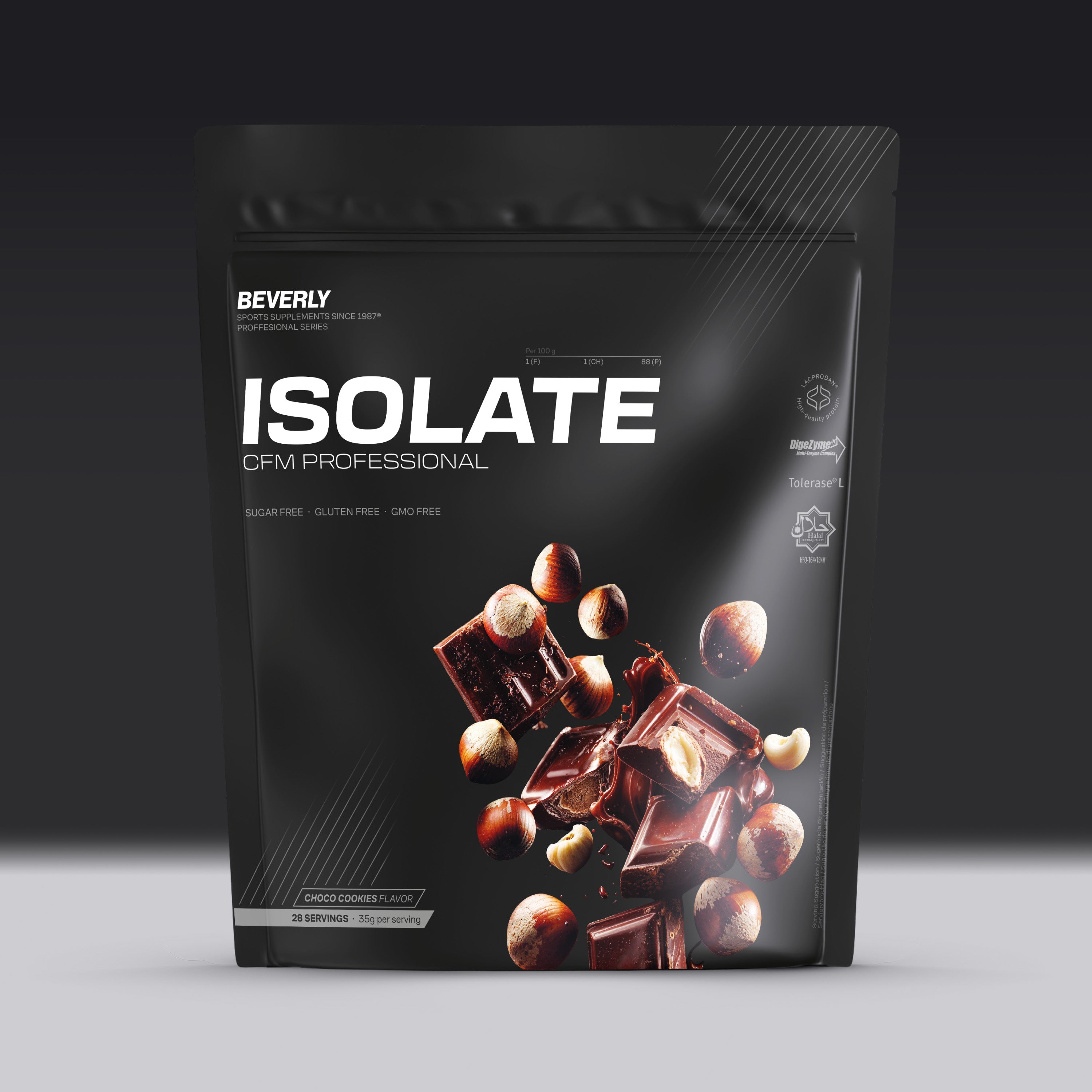
That difference between serving weight and actual protein is what confuses people most when comparing labels.
A protein isolate may be suitable for those looking for more protein per serving and less lactose. It is not automatically better than other options for all goals, but it does describe a specific composition profile.
Difference between protein isolate and hydrolysate
Isolate and hydrolysate describe different characteristics, not opposing categories. A product can be an isolate, a hydrolysate, or both at the same time.
Isolate is obtained through filtration, which increases the protein content and reduces fats and lactose. Hydrolysis breaks down protein chains into smaller peptides, which can change the speed of digestion.
For those who train strength, the quality of the protein, its amino acid profile, and total daily intake matter more than the "hydrolyzed" label. Hydrolysis does not guarantee, on its own, greater muscle gain than a standard isolate.
Protein isolate vs concentrate: which is right for you
A whey concentrate can also be an excellent option for gaining muscle mass. If you want to compare supplements by dose, evidence, and cost per serving for your goal, check the best supplements for gaining muscle mass without fat. The practical difference is usually in the protein per serving and the amount of lactose and fat each serving contains.
If your priority is more protein per serving and easier digestion with lactose, an isolate usually fits better. If your budget or lactose tolerance is different, a concentrate may be enough.
Verifiable criteria for assessing quality
Before comparing prices, it is advisable to check four basic elements on the label and technical sheet.
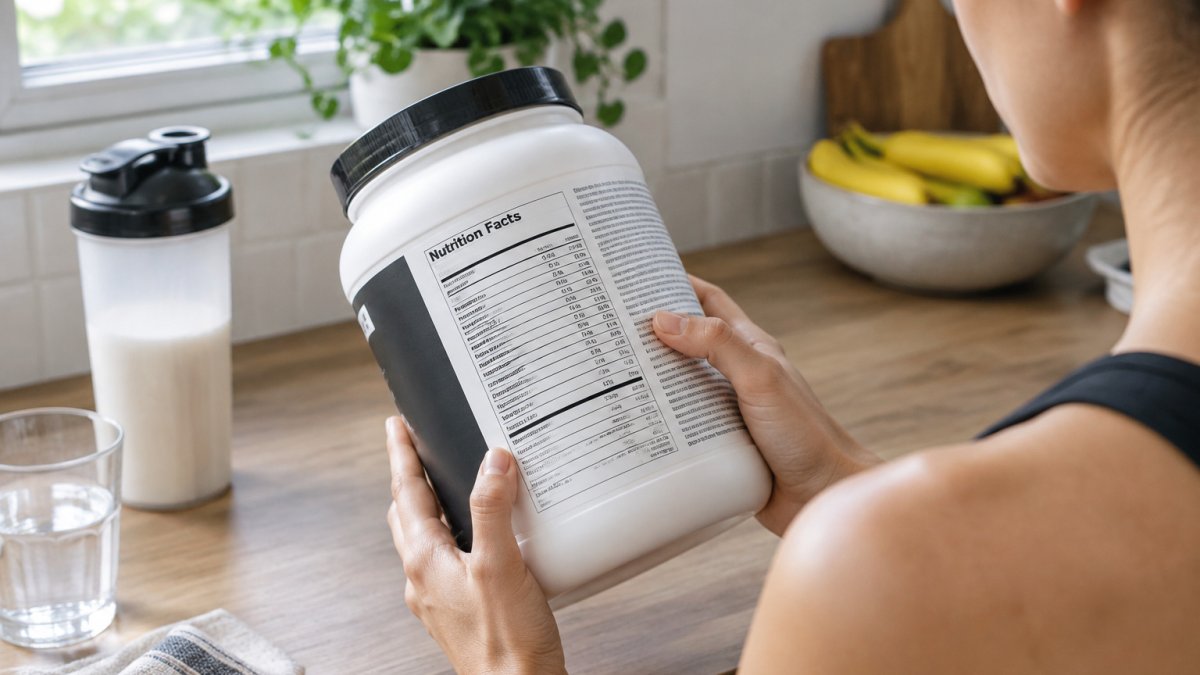
Purity, amino acid profile, and nutritional label
Check how many grams of protein each 100 g of product and each serving provides. Also check the amino acid profile, especially the essential amino acids and leucine.
Check sugars, fats, lactose, and sweeteners according to your needs. Be wary of non-transparent labels or exaggerated promises.
GMP and Halal certifications
GMP (Good Manufacturing Practices) certifications indicate that the product is manufactured under quality, hygiene, and safety standards. Halal certification is relevant for consumers who follow specific dietary requirements. Request documentation or third-party analysis if you need to confirm it for anti-doping controls or other purposes.
Cost per serving and per gram of protein
Comparing prices per container can be misleading. What is useful is calculating the cost per serving and per gram of protein, because this levels the differences between container sizes, recommended doses, and actual protein concentration.
The 1 kg Isolate CFM Professional has a price of €55.20. To calculate it, divide the total price by the number of servings the container contains and, then, divide that cost per serving by the actual grams of protein each serving provides. For the comparison to be fair, always do the same calculation with any other product: divide the total price by the number of servings the container contains and, then, divide that cost per serving by the actual grams of protein each serving provides.
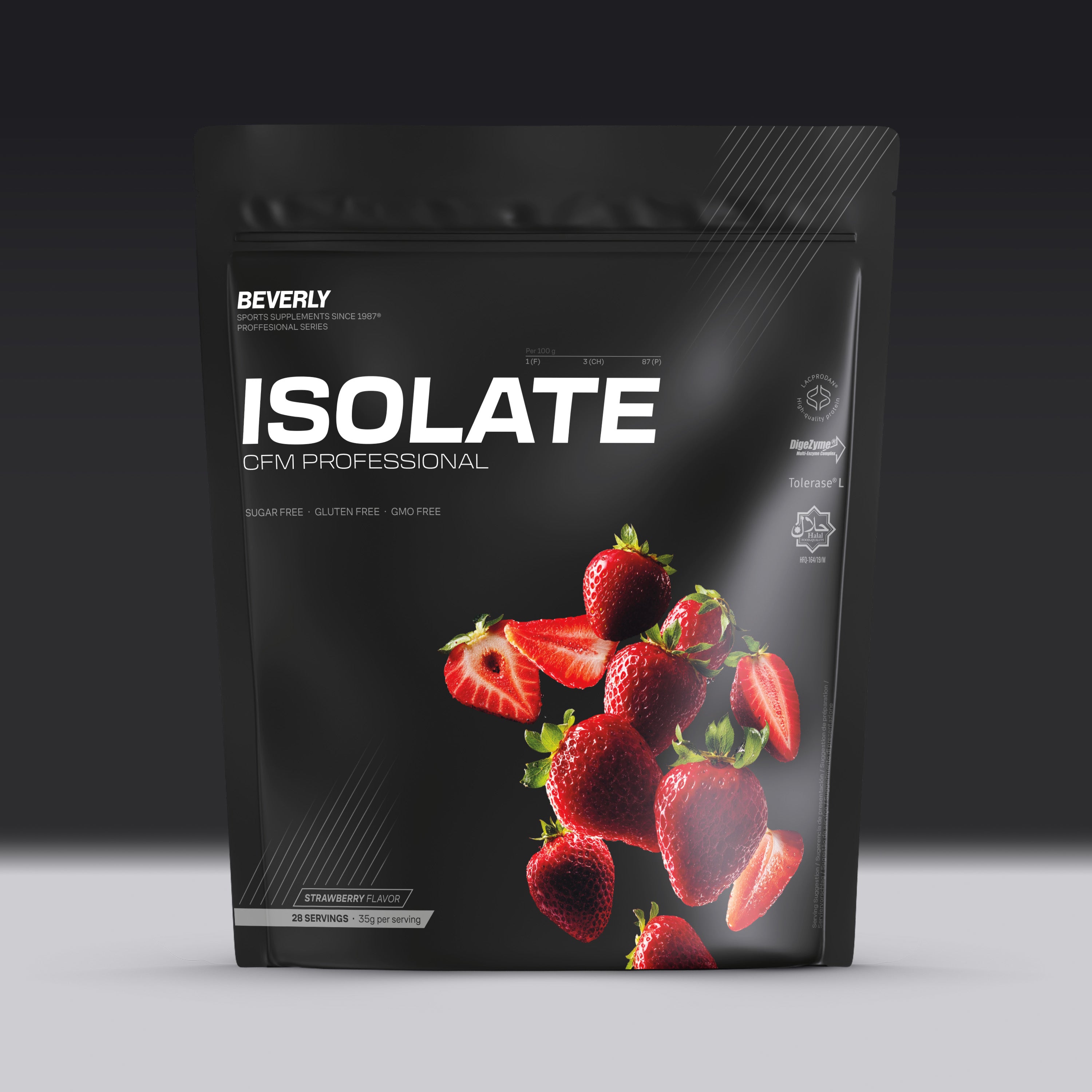
A common mistake is looking only at the price per kilo. A 1 kg container with 30.5 g of protein for every 35 g of product does not cost the same per gram of protein as another 1 kg container with 24 g for every 30 g of product, even if the price on the label is similar. Note: if the container indicates the total weight but not the number of servings, calculate the servings by dividing the total weight by the dose size; if the dose is 35 g and the container is 1 kg, there are approximately 28.5 servings.
It is also advisable to compare the cost per gram of protein between different formats of the same product. For example, if the same isolate is sold in 500 g, 1 kg, or 2 kg containers, the price per gram of protein may vary depending on the format. Always ask for the technical sheet or check the nutritional information to know the actual protein per 100 g of product and per serving.
For an informed purchasing decision, write down these data for each product in a table: total price in euros, grams of protein per serving, and number of servings per container.
To compare fairly, these are the data the article mentions about the cost of the Isolate CFM Professional:
| Data | Value | Note |
|---|---|---|
| Format | 1 kg | Reference container |
| Price | €55.20 | Total container price |
| Servings | Approx. 28.5 | Total weight divided by the 35 g dose |
| Protein per serving | According to label | Divide the cost by the actual grams per serving |
Best protein isolate according to your goal
If you are looking for muscle gain and recovery after training, Isolate CFM Professional is an option to consider due to its amino acid profile. To find out which amino acids to add to your protein and in what doses, check how to improve muscle recovery with EAA, BCAA, and citrulline. It is available in six flavors.
If your goal is definition or controlling calorie intake, the low fat and carbohydrate content of this product fits that need. If you are looking for a specific flavor, choose between Vanilla Ice Cream, Choco Hazelnut, Strawberry, Choco Cookies, or Butter Biscuit, all at the same price of €55.20.
Lactose-free protein isolate: what to expect
An isolate contains less lactose than a concentrate, but it is not automatically suitable for all people with lactose intolerance or for those who have a milk allergy. It is important to distinguish both cases: lactose intolerance is a difficulty digesting the sugar in milk, while a milk allergy is an immune system reaction to milk proteins. A low-lactose product is not exempt from milk proteins, so it is not suitable for a diagnosed allergy.
Isolate CFM Professional includes Tolerase® L, a lactase enzyme, and the Digezyme® complex, according to its ingredient sheet. The product is not a lactose-free food and is not suitable for milk allergies. If you have digestive sensitivity, start with a small dose and consult your healthcare professional before increasing the amount.
Beyond lactose, check the ingredient list if you follow a vegetarian, vegan, or specific restriction diet. A whey protein isolate is not suitable for vegans, and some products may include sweeteners or flavorings that do not fit your preferences. The product label and technical sheet are the reliable source to check these aspects, not generic commercial claims.
If your priority is to completely avoid lactose or milk proteins, there are plant-based protein isolate alternatives, such as pea, soy, or rice. In that case, the buying criterion changes: check the amino acid profile, the protein per serving, and the certifications, just as you would with a whey isolate. The key is to choose according to your actual need and not just by the "lactose-free" claim on the container.
Your next step: choosing the format and flavor at BEVERLY
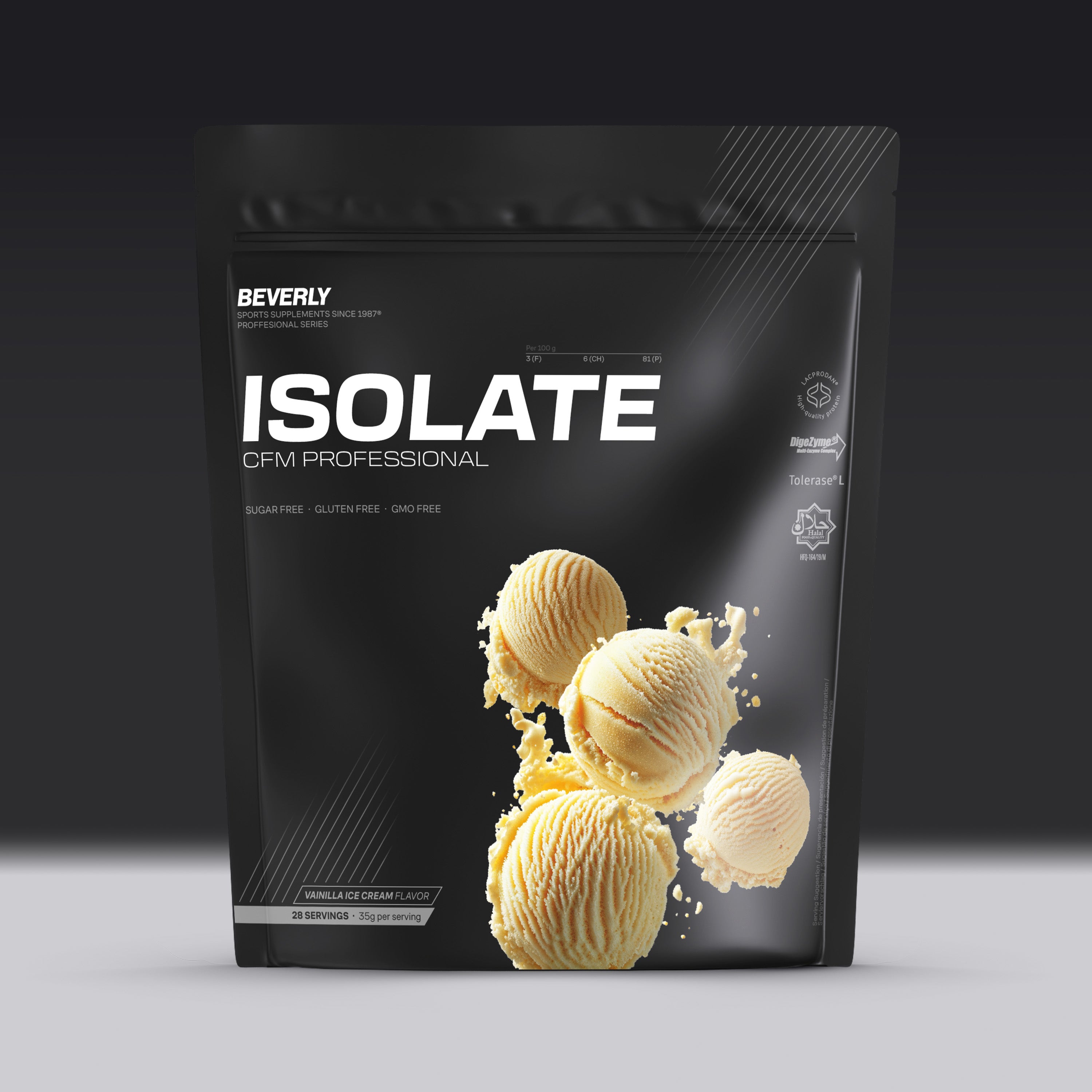
With the above criteria, the next step is to compare the available formats and flavors. You can see the Isolate CFM Professional - 1 Kg - Vanilla Ice Cream and, if you are looking for a deeper comparison, the guide on the difference between protein isolate and hydrolysate.
If you want to explore other supplementation options for your routine, you can also check our selection of amino acids. Remember to always check the protein per serving, the amino acid profile, and the certifications before deciding.
Frequently asked questions and external source placeholders are handled in the pipeline.
European Food Safety Authority (EFSA) on whey proteins
Spanish Agency for Food Safety and Nutrition (AESAN) on food supplements
Ministry of Health on nutritional supplements and labeling
Frequently Asked Questions
What is the difference between isolated and hydrolyzed protein?
Isolated protein refers to a filtration process that increases protein content and reduces fat and lactose in whey. Hydrolyzed protein means that the protein chains have been broken down into smaller peptides. They are not opposing categories: a protein can be both isolated and hydrolyzed. Hydrolysis may change the rate of digestion, but it does not guarantee greater muscle gain than a standard isolate. For most strength athletes, quality, the amino acid profile (especially leucine and essential amino acids), and total daily protein intake are more important. BEVERLY's Isolate CFM Professional is a Lacprodan SP-9226 whey isolate with digestive enzymes included.
How can you tell if an isolated protein is of good quality?
First, check the grams of protein per 100 g and per serving, because the total weight of the serving does not equal the actual protein content. Next, look at the protein source, the amino acid profile (especially leucine and essential amino acids), and the sugars, fats, and lactose. Be wary of non-transparent labels and exaggerated promises. Also check whether the manufacturer provides GMP certification or quality control documentation.
Does whey protein isolate contain lactose?
The isolation process reduces lactose, but does not always eliminate it completely. This is why someone with digestive sensitivity should check the carbohydrate and sugar content on the label. BEVERLY's Isolate CFM Professional includes the lactase enzyme Tolerase L and the Digezyme enzyme complex, according to its ingredient list. Even so, if you have a diagnosed intolerance, consult your doctor or nutritionist before choosing.
How much protein does one serving of protein isolate provide?
To compare options, calculate the cost per gram of protein, not just per container: divide the price by the total grams of protein in the package.
