

Quick Summary
The best amino acids for muscle recovery are the essential ones, because the body does not produce them and leucine activates muscle protein synthesis. However, recovery depends above all on the total daily protein intake, rest, and training load, and a supplement cannot compensate for a low-protein diet.
- Leucine activates muscle protein synthesis, but it needs the rest of the essential amino acids.
- EAAs include nine essential amino acids; BCAAs only cover leucine, isoleucine, and valine.
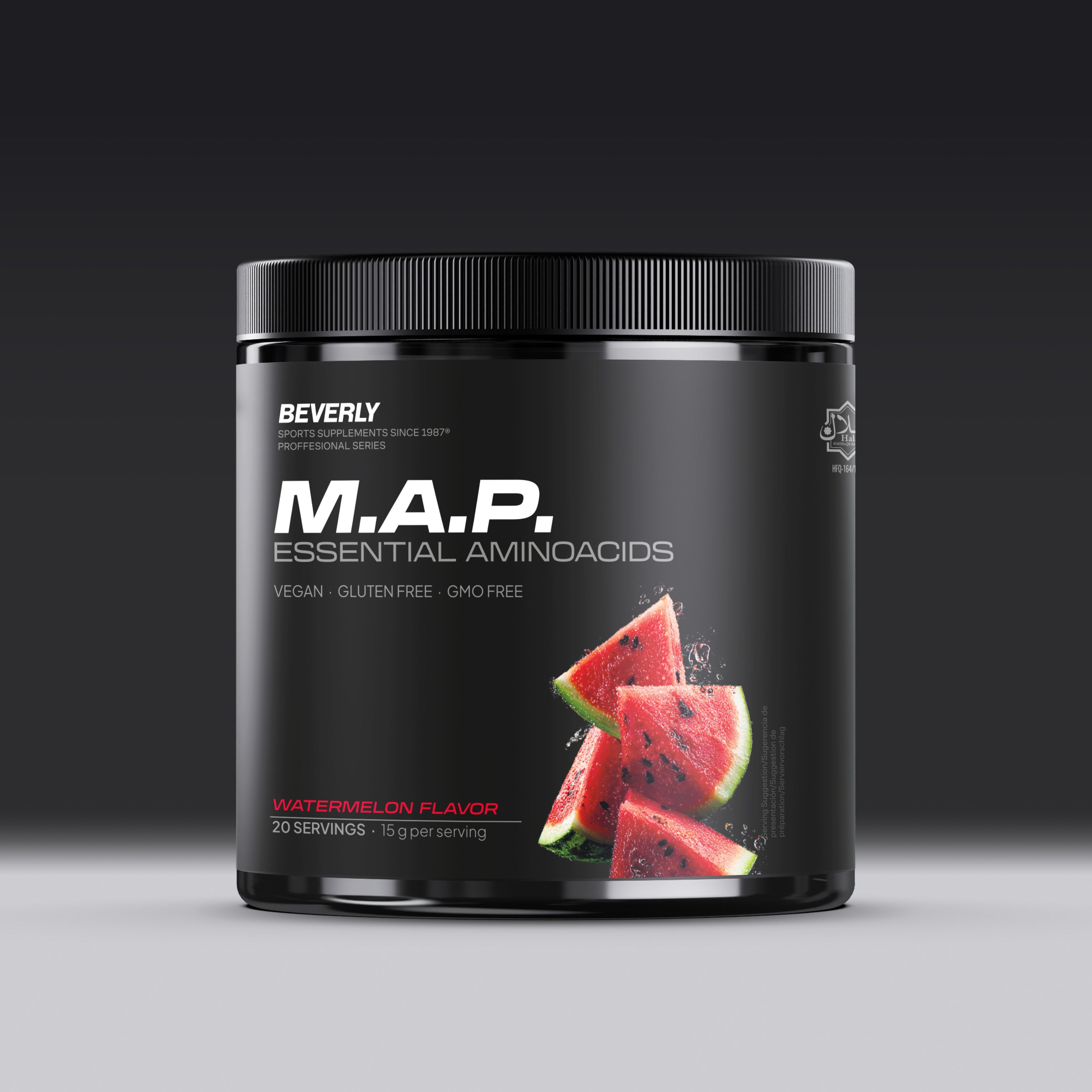
- BEVERLY MAP provides 15 g per serving, with 3400 mg of L-Leucine.
- The recommended MAP dosage is 15 g in 200 ml of water after training.
- First set your daily protein intake and use the supplement only to fill in the gaps.
Table of Contents
- What amino acids really do in muscle recovery
- EAA or BCAA: differences and which to choose according to your goal
- BCAA dosage and when to take them: before, during, or after
- Amino acids for DOMS: what the evidence says and what it doesn't
- Comparison of BEVERLY amino acids for recovery
- Supplements to improve muscle recovery beyond the product
- How to choose quality amino acids and start this week
- Frequently Asked Questions
What amino acids really do in muscle recovery
Amino acids are the building blocks with which the body builds and repairs muscle after strength training. Leucine plays a central role, because it activates muscle protein synthesis, but on its own it is not enough: the rest of the essential amino acids must be available for the repair to proceed.
In practice, recovery depends above all on the total daily protein intake, rest, and training load. An amino acid supplement can make the routine easier, but it cannot compensate for a low-protein diet. Last updated: November 16, 2026
Essential amino acids, such as leucine, isoleucine, and valine, are especially relevant because the body does not produce them and must obtain them from diet or a supplement. At BEVERLY, our MAP formula includes all nine essential amino acids in a dose of 15 g per serving, with 3400 mg of L-Leucine.
A common mistake is thinking that the more amino acids you take, the better the recovery will be. The evidence does not support this idea: what matters is reaching a sufficient protein intake and maintaining consistency.
EAA or BCAA: differences and which to choose according to your goal
BCAAs are three branched-chain amino acids: leucine, isoleucine, and valine. EAAs, or essential amino acids, include those three plus six others that the body also does not produce. Therefore, an EAA supplement covers a broader range.
If your main goal is recovery after training and you already consume enough quality protein in your diet, a BCAA may be sufficient. If you train on an empty stomach or your protein intake is low, EAAs offer more complete coverage.
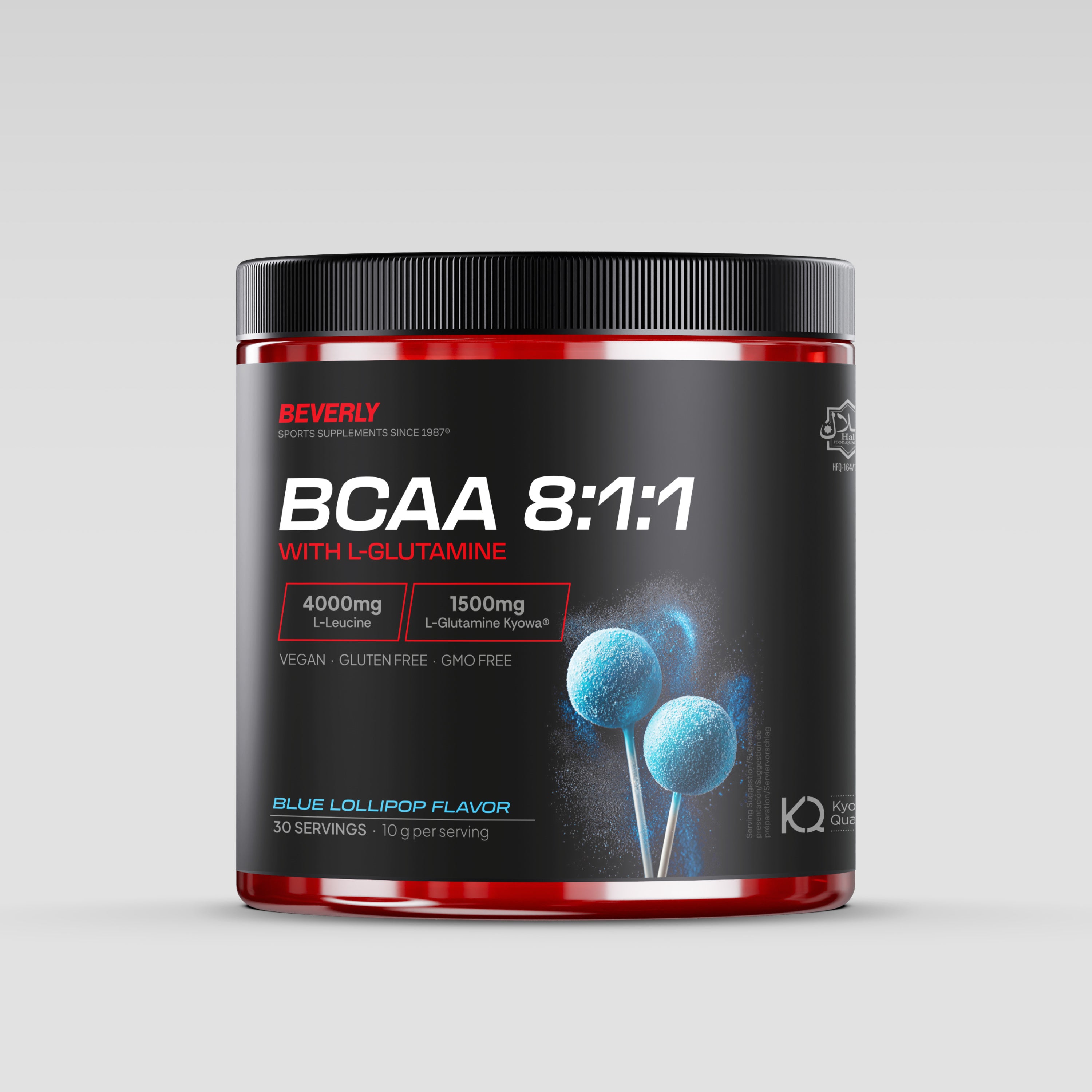
Our BCAA 8:1:1 + L-Glutamine provides 4000 mg of leucine and 1500 mg of glutamine per 10 g serving. For full coverage of all essential amino acids, the 300 g MAP is the reference option.
Ideal for: those looking to cover all essential amino acids and who have a low protein intake. Avoid it if: you already cover your protein needs with food or a quality protein supplement.
BCAA dosage and when to take them: before, during, or after
The usual dose indicated by the manufacturer for BCAA 8:1:1 is 10 g (two scoops) mixed in 200 ml of water, taken about 30 minutes after training or as directed by a nutritionist.

For MAP, the dosage is 15 g (three scoops) in 200 ml of water, also after training. Always follow the dosage indicated on the label and consult a professional if you have any health conditions.
!Athlete preparing a drink in a glass of water after a training session in a bright gym
Amino acids for DOMS: what the evidence says and what it doesn't
Attention: if the pain is accompanied by dark urine, marked weakness, or swelling, do not attribute it to DOMS or treat it with supplements; consult a healthcare professional to rule out an injury or a more serious condition.
Comparison of BEVERLY amino acids for recovery
These are the BEVERLY products related to recovery, ordered by their main function:
- MAP - Essential amino acids - 300 g (€38.50). Provides essential amino acids and vitamin B6. Available in Watermelon and Blue Lollipop flavors.
- BCAA 8:1:1 + L-Glutamine - 300 g (€27.50). Leucine, isoleucine, and valine, with L-Glutamine.
- L-Glutamine Kyowa® - 300 g (€19.00). Kyowa Quality® Glutamine. Available in unflavored.
- L-Citrulline Malate - 300 g (€21.50). Pre-workout.
- HMB - 90 capsules (€23.90). Capsule format.
| Product | Format | Price from | Best for |
|---|---|---|---|
| MAP 300 g | Powder | €38.50 | Full coverage of essentials |
| BCAA 8:1:1 + Glutamine | Powder | €27.50 | Prolonged workouts |
| L-Glutamine Kyowa® | Powder | €19.00 | Sensitive digestion |
| L-Citrulline Malate | Powder | €21.50 | Pre-workout |
| HMB 90 capsules | Capsules | €23.90 | No-mix format |
Price from
Ideal for: those who want a recovery routine with products from a single manufacturer. Avoid it if: your priority is a low-cost product without covering specific needs.
Supplements to improve muscle recovery beyond the product
A supplement works best when it is part of a complete plan. Recovery is supported by sleep, hydration, daily protein distribution, and reasonable training progression.
If you want to learn more about which supplements provide real value, you can read our guide on the best supplements for building muscle with criteria. For a broader view of the topic, it is also useful to review the sports supplementation guide on which supplements work.
Be wary of instant recovery promises.
How to choose quality amino acids and start this week
Choosing an amino acid is not just about comparing grams per serving. These are the criteria to review before buying, which are rarely explained in detail in usual comparisons.
1. Actual amount per serving, not per scoop. Check how many grams of amino acids the dose you are actually going to take provides. A product may indicate 5 g per scoop, but the recommended dosage is two scoops. Always compare the effective daily dose, not the weight of the container.
2. Complete or isolated profile. If you are looking for recovery and your protein intake is low, a product with all nine essential amino acids makes more sense than an isolated BCAA. If you already cover protein with food, a BCAA may be sufficient. Check the leucine ratio and whether the product includes the rest of the essentials or not.
3. Purity and third-party testing. Manufacturing with GMP standards is a starting point, but it does not guarantee the purity of the batch. Look for independent certifications or third-party analyses that verify the absence of contaminants and the agreement between the label and the content. At BEVERLY, we manufacture with GMP standards and most of our range has Halal certification.
4. Labeling and allergens. Review the full list of ingredients, declared allergens, and added sweeteners or flavorings. If you have a sensitive digestion, powdered formats with sweeteners may not be the best option; consider neutral or capsule alternatives.
5. Safety and interactions. Amino acids are safe at usual doses for most healthy people, but it is advisable to consult a professional if you have a medical condition, follow a low-protein diet by prescription, or take medication. Consult a professional before using supplements if you have a liver or kidney condition.
6. Individualized dosage. There is no universal dose. Body weight, total protein intake, training type, and experience all play a role. A reasonable approach is to first meet your daily protein needs through food and use the supplement to make up any shortfall, not the other way around.
How to start this week. Set your daily protein intake (for example, spread across three or four meals), then add a single specific amino acid and assess how you feel over four weeks. If you don't notice any clear differences, don't increase the dose: first review your sleep, hydration, and training load progression.
Be skeptical of promises of instant recovery and products that do not state the exact amount of amino acids per serving.
To buy with confidence, before completing your purchase, follow these steps to buy sports supplements online safely. If you already know your goal, you can start with the MAP essential amino acids or the BCAA 8:1:1 for prolonged training.
If you want to choose amino acids based on your goal, explore the BEVERLY range and find the product that best suits your training.
Frequently Asked Questions
Which amino acids are best for muscle recovery?
The most relevant amino acids for recovery are leucine, isoleucine, valine, and essential amino acids as a whole. Leucine is most strongly associated with activating muscle protein synthesis. If you already consume enough protein in your diet, the additional benefit of supplementation is smaller and depends on your training, your diet, and your tolerance. Among BEVERLY products, MAP provides the complete profile of essential amino acids, while BCAA 8:1:1 concentrates leucine, isoleucine, and valine with L-Glutamine.
Which is better for recovery, BCAA or EAA?
EAAs include all nine essential amino acids, while BCAAs consist of only three: leucine, isoleucine, and valine. EAAs include all nine essential amino acids, while BCAAs cover only leucine, isoleucine, and valine.
When is the best time to take amino acids: before or after training?
The label on BEVERLY products indicates taking them about 30 minutes after training or as directed by a nutritionist. The most important thing is to meet your daily protein intake and remain consistent.
Do amino acids help reduce muscle soreness?
There is no definitive answer regarding amino acids and muscle soreness, and they should not be presented as a solution for muscle pain.
