

Quick Summary
A neutral-flavored protein isolate is a powder supplement with a high protein content, very little fat and lactose, and no added flavors that mask its natural taste. It can be mixed into shakes and recipes without affecting the flavor, and it differs from concentrate due to its finer filtration.
- Isolate provides more protein per serving and fewer carbohydrates and fats than concentrate.
- Compare the protein per 100 g and per serving, not the total weight of the container.
- A 35 g serving of Isolate CFM Professional provides 31.5 g of protein.
- Pure Whey provides 28 g of protein per serving and contains no sweeteners or colorings.
- Isolate CFM 2 kg reduces the cost per serving to €1.68.
Table of Contents
- 7 Best Neutral-Flavored Protein Isolates
- What is a neutral-flavored protein isolate and how does it differ
- Difference between protein isolate and hydrolysate
- Criteria for choosing a neutral isolate: protein per serving, amino acid profile, and lactose
- Comparison of BEVERLY neutral-flavored protein isolates
- Price per serving and value for money
- How to take protein isolate and use it in cooking and shakes
- Neutral whey protein for cooking: uses and limitations
- Choose your neutral isolate and shop at BEVERLY
- Frequently Asked Questions
7 Best Neutral-Flavored Protein Isolates
Last updated: November 22, 2026
What is a neutral-flavored protein isolate and how does it differ
A neutral-flavored protein isolate is a powder supplement with a high protein content and very little fat and lactose, with no added flavors that mask its natural taste. Since 1987, BEVERLY has manufactured sports nutrition supplements, and this protein can be used in shakes and recipes. That is why it is the preferred choice for those who want to mix it with anything without noticing the flavor.
The difference with concentrate lies in the filtration process. The isolate undergoes finer filtration, so it provides more protein per serving and fewer carbohydrates and fats. Concentrate retains more of these components.
Protein isolate versus concentrate: isolate is purer, while concentrate usually costs less per kilo.Difference between protein isolate and hydrolysate
Isolate and hydrolysate describe different characteristics, not opposing categories. The same protein can be both isolated and hydrolyzed. Isolate refers to the level of purity, while hydrolysis breaks down protein chains into smaller peptides.
Hydrolysis can change the speed of digestion, but it does not guarantee more muscle mass than a standard isolate. For most people who do strength training, what matters most is the quality of the protein, its amino acid profile, and the total daily amount they consume.
You can expand on this comparison in our article Protein isolate or hydrolysate: key differences.
Criteria for choosing a neutral isolate: protein per serving, amino acid profile, and lactose
Before buying, carefully check the label. These are the points that determine the choice:
- Protein per serving: compare the grams of protein per 100 g and per serving. The total weight of the container is not the same as the actual protein.
- Protein source: whey isolate (CFM), concentrate, or hydrolysate.
- Amino acid profile: look especially at the essential amino acids and leucine.
- Lactose and fats: an isolate usually contains very little lactose, which is useful if you have a sensitive digestion.
- Sugars and sweeteners: neutral isolates contain no flavors, but it is advisable to check for sweeteners if you avoid them.
Not all isolates are the same. If you want a more complete guide, check out How to buy high-quality protein isolate without mistakes.
Comparison of BEVERLY neutral-flavored protein isolates
To choose wisely, it is best to compare products using the same parameters: protein per 100 g, protein per serving, ingredients, allergens, and format. Among our proteins, Isolate CFM Professional is the whey isolate option available at BEVERLY. This is the homogeneous comparison:
| Product | Format | Type | Protein per serving (35 g) | Featured ingredients | Allergens | Price from | Best for |
|---|---|---|---|---|---|---|---|
| Pure Whey | 1 kg | Whey concentrate, no flavors | 28 g | Digezyme® and Tolerase® digestive enzymes; no sweeteners or colorings | Milk | €53.90 | Cooking and neutral shakes |
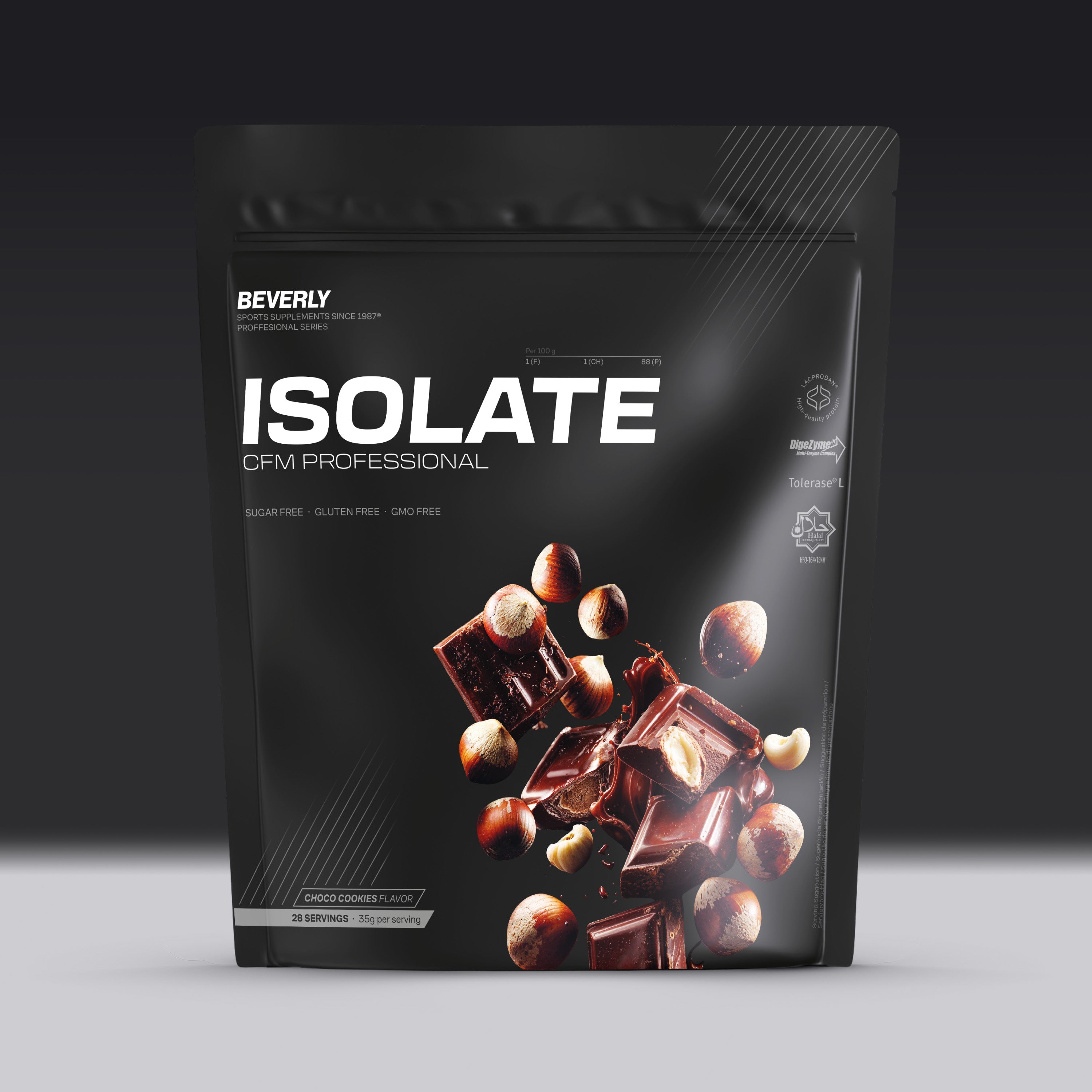
| Isolate CFM Professional | 1 kg | Whey isolate, various flavors | 31.5 g | CFM microfiltration isolate; GMP and Halal certification | Milk | €55.20 | Recovery and definition |
| Isolate CFM Professional | 2 kg | Whey isolate, various flavors | 31.5 g | CFM microfiltration isolate; GMP and Halal certification | Milk | €96.00 | Long-term consistent use |
How to read this table: the protein per 100 g indicates the product's purity; the protein per serving is what you actually consume in each serving. Isolate CFM Professional provides 31.5 g of protein per 35 g of powder, compared to Pure Whey's 28 g, because its filtration process removes more fat and lactose. That difference is noticeable if you want to maximize protein per gram or if you have a sensitive stomach.
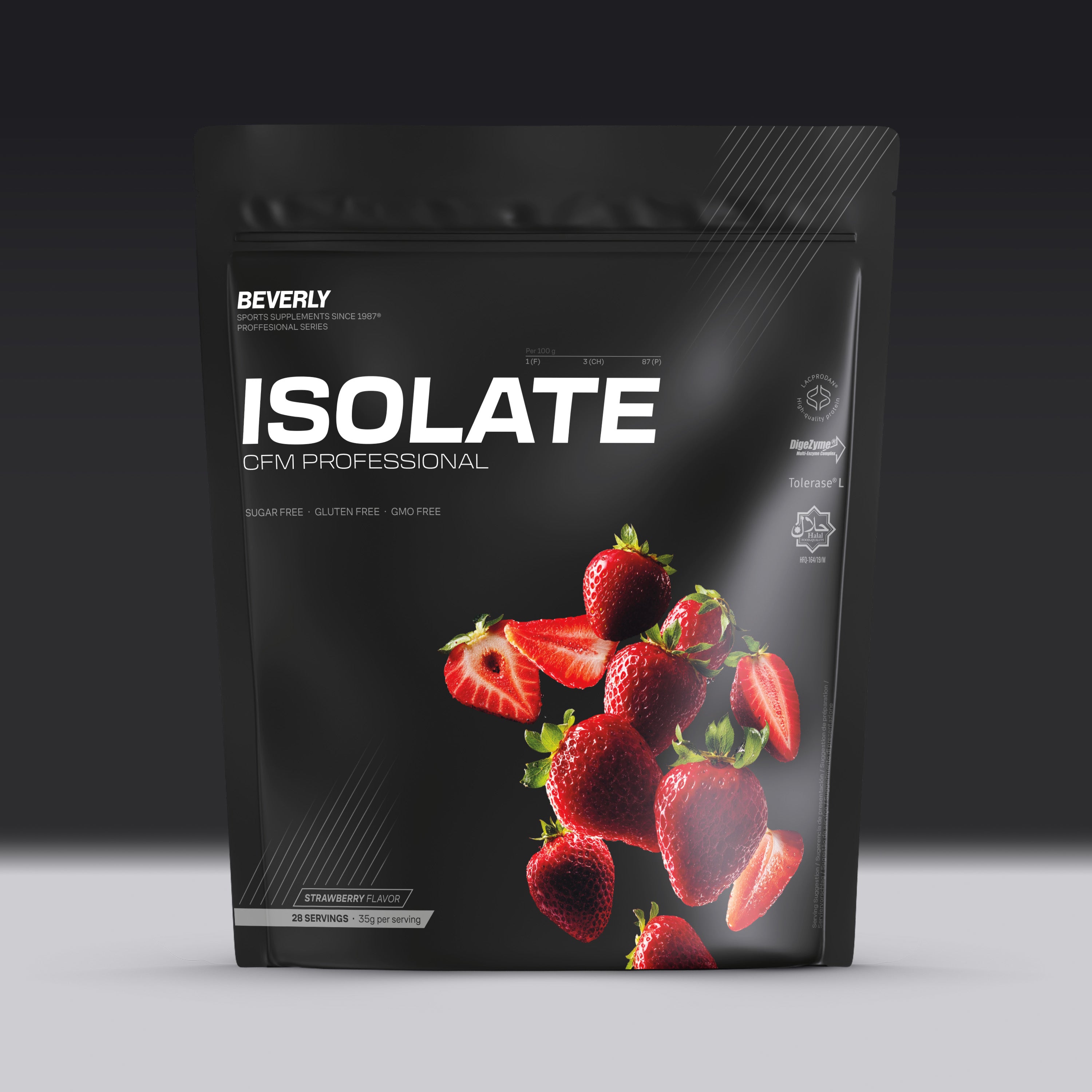
Pure Whey - 1 kg is a whey concentrate protein with no added flavors, sweeteners, or colorings. It contains Digezyme® and Tolerase® digestive enzymes.
Isolate CFM Professional is a whey protein isolate with a complete amino acid profile and a high leucine concentration. It is low in fat and carbohydrates, dissolves well in water, milk, or plant-based beverages, and has GMP and Halal certification. It is available in 1 kg and 2 kg sizes, and in various flavors. If you are strictly looking for a neutral flavor without aromas, Pure Whey is the better fit.
Attention: do not confuse the container's weight with the actual protein content. A 1 kg container does not contain 1 kg of protein. Always check the protein per 100 g and per serving indicated on the label, not just the size of the format.
Price per serving and value for money
The price per container is not useful for comparison: two containers of the same size can yield very differently depending on the protein they provide per serving. For a fair comparison, we calculate the cost per serving and the price per 100 g of protein, using a 35 g serving as a reference. These are the figures with the current prices in the catalog:
| Product | Price | Servings per container | Cost per serving | Protein per serving | Price per 100 g of protein |
|---|---|---|---|---|---|
| Pure Whey 1 kg | €53.90 | ~28 | €1.92 | 28 g | €6.86 |
| Isolate CFM 1 kg | €55.20 | ~28 | €1.97 | 31.5 g | €6.25 |
| Isolate CFM 2 kg | €96.00 | ~57 | €1.68 | 31.5 g | €5.33 |
Servings per container
How to interpret these numbers: the cost per serving of Isolate CFM 1 kg is only €0.05 higher than that of Pure Whey, but it provides 3.5 g more protein per serving. If you look at the price per 100 g of protein, the isolate is more cost-effective (€6.25 compared to €6.86). The 2 kg format reduces that cost even further, down to €5.33 per 100 g of protein, because the large container lowers the price per kilo.
Value for money according to your profile:
- Daily consumption and intense training: Isolate CFM 2 kg is the most efficient option. At €1.68 per serving, you get about 57 servings of a highly pure, GMP-certified isolate.
- Moderate use or first purchase: Isolate CFM 1 kg allows you to try the product without committing to a large container, even if the cost per serving is slightly higher.
- Cooking and recipes: Pure Whey 1 kg is more versatile if you are looking for an unflavored protein to mix, but its cost per 100 g of protein is the highest in the comparison.
Note: the prices per serving you see on the product sheets are sometimes calculated using 30 g servings, not 35 g. If you are comparing with other brands, make sure to use the same amount of powder and the same amount of protein per 100 g; otherwise, the actual cost can vary by up to 20%. The prices shown are from the BEVERLY catalog and may change; check the website for the current price.
How to take isolate protein and use it in cooking and shakes
Mix one serving (35 g) of unflavored isolate protein with water, milk, or a plant-based drink, and take it after training or as directed by your nutritionist.

For cooking, unflavored protein works well in pancake batter, yogurt, and no-bake desserts. Start with one scoop of protein and gradually adjust the amount, because an excessive dose can dry out the mixture. Consult a healthcare professional if you have a specific digestive condition.
Try the shake with cold water; the texture stays lighter and the flavor remains clean.
Unflavored whey protein for cooking: uses and limits
Unflavored whey is useful for enhancing recipes, but it has limits. It does not replace flour in batters that need structure, and at high temperatures it can become lumpy. It is best to add it at the end of preparation, or in no-bake recipes.
It is best not to exceed the recommended amount on the container. Excess does not improve results and can alter the texture.
Choose your unflavored isolate and shop at BEVERLY
If you are looking for an unflavored protein with a good balance between purity and price, BEVERLY has options for cooking and shaking. We have been manufacturing our own products since 1987, and Isolate CFM Professional is one of our options for muscle recovery. Start with the format that best suits your consumption and buy your unflavored protein at BEVERLY.
Frequently Asked Questions
What is an unflavored isolate protein?
It is a powdered supplement obtained from whey through filtration, which increases the protein content and reduces fat and lactose. The unflavored taste means it does not contain strong aromas, so it blends into shakes, yogurt, or recipes without altering the flavor. BEVERLY isolate proteins, such as Isolate CFM Professional, come in flavors like chocolate or vanilla, while Pure Whey is a concentrate without added flavors. It is advisable to read the label to check if the flavor is truly unflavored before buying.
What is the difference between isolate and hydrolyzed protein?
Isolate and hydrolyzed describe different characteristics, not opposing categories. Isolate refers to the purity and protein content after filtration. Hydrolyzed indicates that the protein chains have been broken down into smaller peptides, which can change the speed of digestion. The same protein can be both isolate and hydrolyzed. For most strength athletes, what matters most is the quality of the protein, the amino acid profile, and the total daily intake.
How much protein does a serving of isolate whey usually provide?
Check the container of each flavor of Isolate CFM Professional to see how much protein a serving provides. That figure is the data to compare between products, because the total weight of the serving does not equal the actual protein. Before buying, check the grams of protein per 100 g and per serving in the nutritional table of each container.
Can unflavored isolate protein be mixed with food and drinks?
Yes. An unflavored isolate protein dissolves in water, milk, or a plant-based drink and can also be added to yogurt, oatmeal, or cake batters. When cooking at high temperatures, the texture can change, so it is best to use it in moderate baked preparations or add it at the end. For drinks, a 35 g scoop in water dissolves well with a blender or a shaker.
Does isolate protein contain lactose?
It contains very little lactose, because the isolate process removes much of it along with the fats. Even so, it is not necessarily suitable for everyone with intolerance. BEVERLY isolates include the Digezyme enzyme complex and Tolerase L, a lactase enzyme designed to improve digestion. If you have digestive sensitivity, start with a small dose and observe how it affects you before increasing it.
